Pages

Showing posts with label Christian writing. Show all posts

Tuesday, 21 July 2015

“What is ‘pray’?”

By Simon Kennedy


“What is ‘pray’?”


It was my son’s fifth birthday and he was having a friend sleep over for the first time. We were running through our normal bedtime routine so I told his friend that we normally pray together. He said that he had never heard of “pray” before.

I sat on the floor between their beds. “When we pray, we talk with God, just like we’re talking now.”

“What is ‘God’?”


I’ve read claims that Australia is no longer a Christian nation; I’ve engaged in many conversations with friends and strangers who deny the existence of God; I’ve mourned the growing tide of spiritual apathy and even hostility in our nation.

But this was my first encounter with total ignorance.


How can we talk about Jesus and the gospel with people who haven’t even heard of the possibility of a spiritual realm? Surely one of our roles as Christian writers is to awaken that awareness and cause a hunger for things beyond the material world.

When I started this post, my intent was to motivate. I wanted to remind myself and others of the darkness we seek to illuminate and galvanise our efforts to pierce this darkness. Simple enough. A worthwhile goal. I thought it was progressing well: I had my hook, my introductory story, a reasonable transition.

Why was it so difficult to take it any further?


After a bit of prayer, God gave me a “know your audience” moment: most of the people who will read this are already motivated!

One of my goals since joining the leadership of Omega Writers has been to familiarise myself with what God is already doing among Australia and New Zealand’s Christian writers. I’ve been privileged to make contact with dozens of His people who have been penetrating the darkness with God-honouring words and encouraging others to do the same.

The landscape of Christian writers and those who support them is rich and diverse. I’m sure that I’ve only scratched the surface and am eager to have conversations with many more faithful workers in the days to come.

But if motivation isn’t the issue, and if God has already raised up people and groups to shine bright words into our dark times, what role does He want Omega Writers to play?

I think one of our main tasks will be to facilitate connections – to help the various parts of God’s body of writers to find each other, educate each other, inspire each other towards excellence, and encourage each other as we seek to minister to believers and spread the gospel to unbelievers.

I know many of you are doing this already, and I’d like to encourage you to continue. If you would like to be more involved—perhaps even connect with other Australian and New Zealand writers—I’d encourage you to get involved in a local writing organisation, such as Omega Writers. Head over to our website, www.omegawriters.org, if you want to find out more.

About Simon Kennedy

Simon is the current President of Omega Writers. He would love to hear from anyone who shares his passion to see light-infused words push back the darkness. Simon has won national short story and poetry competitions, is producing a television pilot with hopes of selling it to a domestic broadcaster, and his YouTube channel, Songs with Simon, is closing in on one million hits.

Friday, 18 July 2014

Who Am I Writing For?

By Rose Dee

I had no specific plan in place when I sat down to write my first novel. I didn’t seriously consider that I would become an author, nor did I have great ambitions for publication. I had decided to ‘give writing a go’ with a lot of hope, but no thought as to what would come next.

So when I was asked who my target audience was, I had to pause and think. I understand now that most professional authors have this mapped out. Like a business, they have a target demographic and when they are writing they consider this demographic, adapting writing style and storyline to suit. I can honestly say that, in my experience, my personal taste and faith vision influenced my writing.

This is a wonderfully romantic and freeing strategy, but I have discovered that it also comes with some serious pitfalls. One is inadvertently introducing my work to the wrong readers. If you know who you are writing for, you can submit your work to the people most likely to enjoy it. The book becomes a viable commercial option when the marketing is targeted and specific. I have found that knowing the readers who will enjoy my books is very important in determining how I ‘work’ the work.

Unfortunately, pursuing your target audience does not necessarily ensure you financial success or perfect reviews. There is a myriad of factors influencing the commercial success of a novel, many of which are out of the control of the author.

The other problem I have faced is that being commercially driven is as dangerous as being commercially clueless. If a Christian author has a calling from the heart to write on a certain topic, it is the Lord who determines the audience for that work, not the world’s marketing machine. Being in His plan is for more satisfying than have it all planned.

I have come to the conclusion that while I write stories as a ministry (as well as for my own enjoyment!), having some knowledge of who else in the world will enjoy my books makes moving forward, in both writing and marketing, a lot easier. Outside of this broad plan, it’s all down to prayer—which ultimately is right where it should be.

About Rose Dee

Rose, who holds a Bachelor of Arts Degree, was born in North Queensland, Australia. Her childhood experiences growing up in a small beach community would later provide inspiration for her first novel, Back to Resolution.

Her novels are inspired by the love of her coastal home and desire to produce exciting and contemporary stories of faith for women. Beyond Resolution and A New Resolution are the second and third books in the Resolution series.

Rose’s debut novel Back to Resolution won the Bookseller’s Choice award at the 2012 CALEB Awards, while A New Resolution won the 2013 CALEB Prize for Fiction. She has also released The Greenfield Legacy, a collaborative novel, written in conjunction with three other outstanding Australian authors.

Rose resides in Mackay, North Queensland with her husband, young son, and mischievous pup, Noodle.


Tuesday, 10 June 2014

Inspirational v. Christian: Really?

By Rel Mollet

Following on from my last post regarding "crossover fiction", today I'm responding to the second part of Iola's question:

What do I think of the trend for fiction from the big publishing houses (e.g. Thomas Nelson) to be more "inspirational" than "Christian".

A quick look at Dictionary.com reveals the following definitions:

Inspirational: With reference to theology:
a. a divine influence directly and immediately exerted upon the mind or soul.
b. the divine quality of the writings or words of a person so influenced.

Christian: of, pertaining to, or derived from Jesus Christ or His teachings.

To me, both definitions sound pretty good (when interpreting the "divine" as God), so it means I love both kinds of stories!

That said, I'm thinking Iola is comparing the two in the sense of "inspirational" meaning a positive, clean story as opposed to a "Christian" story having a more evangelical bent, or one with overt theological content.

Some random thoughts on this issue:
  • I read for pleasure, relaxation, entertainment, mental stimulation, challenge, and encouragement
  • When I pick up a novel, I'm not looking for exegesis, a Bible study, or a lesson in theology. 
  • My experience has been that conversion scenes are rarely done well in novels, and often interrupt the natural flow of the story and seem placed there because of some misplaced belief that if it is a Christian novel, it must have one. This has become less of an issue in the last decade.
  • A gentle caress communicates more to me than wielding a hammer
  • We need to step away from the prevalent belief, in some circles, that if a story doesn't have a requisite Bible verse, conversion scene, or multiple references to characters attending church and doing the "right thing", then the story is not "Christian" enough.
As most of us know, the book of Esther makes no mention of God and yet the spiritual truths of love, sacrifice, service, courage, and faith couldn't be more clearly made as the young Jewess saves her people. For me, this is the best kind of story - one that leaves me to wrestle with the underlying message, words that make me ponder the deeper meaning of the story.

Denise Hunter's contemporary romance, Surrender Bay, is one such story. God is not mentioned, there is no overt "come to Jesus" moment, and yet that story spoke to me on so many levels. Here's an excerpt from my review, a few years ago, "God’s love, faithfulness, and the heartache He endures to draw us back in to relationship with Him is powerfully told in this story by way of allegory. Without any overt reference to God, Denise has turned the spotlight on the depth of God’s love for His children in a story that will remain with you long after the last page is read."

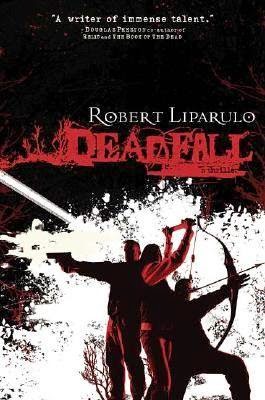
I'm also of the view that we need a range of fiction that appeals, not only to a broad range of believers, but stories that non-believers will enjoy, too. Robert Liparulo writes terrific thrillers, with all the action, and yes, violence, that appeals to many men. Yet they are clean, without the language, gratuitous violence and sex, that hallmark many contemporary thrillers available to men these days. I love that I can enjoy them (nothing like a well written thriller, in my book!), but that I can comfortably recommend them to men seeking novels that meet their need for action and suspense.

My dear friend, Tamara Leigh, who has written a number of contemporary Christian romances for Waterbrook Multnomah, has recently successfully published some excellent Christian medieval romances (traditional Christian publishing houses are most reluctant to publish books in that era due to the prevalence of Catholicism), as well as rewriting her general market medieval romances as "clean" novels. She has discovered there is great interest in "clean" novels as there is a significant number of readers who are wary of being thumped over the head with Christian content in a story marked for a Christian audience, but are also trying to avoid the overly sexualised content in romance novels.

Christian writers are forced to walk a very fine line, by their readers and their publishing houses. Sadly, many of the people criticising the content of their stories are fellow believers. I'm all too often reading reviews that complain of too much of this and not enough of that. In some instances it is justified, in most cases it simply saddens me.

Every writer, like every person, is answerable to God for what they do. From what I can understand by talking to so many writers over the years, is that the ability to write well is a gift, a talent given to them by the Lord, that hopefully one they have the opportunity to use to bless so many. Who are we to say (or a publishing house for that matter) what story someone should write? We will never know which words might touch someone's life - they may be the obvious ones, but more often than not, they are the little ones, the unassuming subtle turn of phrase, a character wrestling with a choice in life, an authentic, heartfelt emotion, that may make all the difference in a reader's life journey.

********

Rel Mollet founded her book-reviewing blog www.RelzReviewz.com in 2006, which is dedicated to showcasing Christian Fiction and its writers by way of reviews, author interviews, character spotlights, and more. 

Rel is a contributing writer for NovelCrossing.com and FamilyFiction.com, and an Advisory Board member of the INSPY Awards.  A book club co-ordinator for over a decade, Rel resides in Melbourne with her family.


Monday, 19 May 2014

My Writing Process #2.

Mary and I with 2 grandchildren
and 3 books.
by Ray Hawkins

Last week I shared a little on the discipline which I needed to write. This time I was asked what motivated me to write what I write. To be honest I’m very conservative in my theology and strongly convinced about the inspiration and relevance of Scripture. So I need to share my conscious, sub-conscious and unconscious convictions which undergird and influence my writing.

What makes Devotional writing Christian? The following definitions explain the framework in which my thinking takes place on this subject.
Christian = being in agreement with, honouring too and possessed by Jesus Christ and His Scriptures. Outside of that definition the writing may be moral or wear the Denominational imprimatur it will undoubtedly be helpful. However that doesn’t necessarily mean it is a Christian Devotional.

Devotion = Charam. This Hebrew word is an important religious expression. It speaks of something chosen for destruction or sacred use. It is specifically given to God. Eg. Jericho in Joshua 6. How can you give something to God? It must either be offered as a sacrifice or placed into the hands and keeping of His servants. They in turn must use it as directed for His purposes and glory.

How can a person devoted to God the Father?
We undergo a ‘death experience’ in the spiritual realm, initiated by faith in Christ’s substitutionary sacrifice. According to, Galatians 2:20 Romans 6 believers shared in His death, burial and resurrection. Therefore, we have had our old nature put to death and have been made alive by the power and grace of Christ Jesus. Part of our new life means we have been set apart for special purposes (sanctified). Being writers, that means being ‘devoted’ encompasses our writing. In the N.T. only one word is translated as ‘devotion.’ In the KJV it is ‘sebasma’ and means the object of worship (Acts 17:23). Therefore, when we write ‘devotionals’, it is an expression of our worship!

Could we say therefore that Christian writing needs to bear the marks of ‘death?’ That is, our writing is a sacrificial offering to the Lord God, a fragrant offering. Such writing is our subconscious attitude of the heart colouring the mind to frame words so that others are blest and our Lord honoured.

I first began writing devotional material for my local church paper. I didn’t have any idea of writing a book of devotions. The articles were short and parochial, but they were God honouring and Bible saturated. Not merely quoting verses but drawing out their word pictures and purposes. Then the opportunity came to send a submission to Upper Room which was accepted. Over the years others followed. I guess in an unconscious way these and some other opportunities refined, sharpened and prepared me for the discipline of writing Devotional books.

As a preacher I like presenting expository sermons in series form. Looking back I guess it was a natural way for me to go in considering a devotional book. It had to be a series. The book had to grounded in and flavoured by what God’s word said on the subject matter. So, when I was challenged by Mary Ellen Hawkins to create words for a devotional book, two things came into play. Both were strong passions. What passionate themes do I have? Plenty! What to choose. Being a new grandad made that an easy choice. ‘Children: God’s Special Interest’ was born. I also settled on 31 days as the length. Could be boring to others to do it any longer! Being deliriously happily married for nigh on 50 years made the next one a must. ‘From Eden with Love’ sought to make God’s purpose in marriage clear, from Bible passages. Because of the confusion within society today on this subject this book puts the Christian view of marriage simply, clearly and spiritually.


Book signing
My publisher, ‘Even Before Publishing’ (now Rhiza publishing, a division of Wombat books) allowed me to put four other 31 day Devotionals together. Bethlehem Warrior Baby; Captured by Calvary; Dynamic Ageing and Signposts to Happiness. Each book closes with a poem on the theme (does that make it 32 days?) Hopefully, what I’ve shared provides a glimpse into my way of and motivation for writing. Are there still passions needing to be ‘birthed’? Yes! Will they be enclosed in an attractive cover? Time will tell. However, could I leave the following challenge:

Your generation needs you to speak to its heart and help them handle their struggles with the freshness of Christ in and through you. You need to develop your skill, style and presentation and let it loose. This isn’t easy. It can be disheartening. If you have a fire in your spirit, keep it fuelled by conviction and endeavour. Such fuel is ‘pumped in’ to your being through prayer, ‘feeding’ your spirit from God’s word, like minded fellowship and worship. Taking your writing seriously will mean you by-pass pious phrases and mere interesting anecdotes. You will choose to confront your readers by life enriching, life changing, life nourishing and life challenging insights. These will be of more lasting value than mere warm fuzzy feelings. Your writing will liberate your readers’ spirit, enlarge their vision, discipline their soul, deepen their faith and refresh their grace.

Thanks for letting me share with you the above thoughts. I long for you to know the joy of writing under the smile of the Lord.