Pages

Showing posts with label Anne Hamilton. Show all posts

Thursday, 18 January 2018

Book Review: Dealing with Python: Spirit of Constriction by Anne Hamilton

Review by Judy Rogers


For years I have listened to Anne Hamilton speak on destinies, thresholds, names and covenants. Covenants that date back to Biblical times—covenants that have guided and destroyed men and women. Covenants that have guided and destroyed Nations. Covenants that have released blessings and hope and promise. It has been this book, ‘Dealing with Python: Spirit of Constriction’, that has consolidated this information and turned on the light in my mind.


‘As far as the word threshold goes, whenever it is used in a spiritual sense here, it denotes the entry point into our destiny. It’s essentially the ‘doorway’ or the ‘opening’ into the individual calling God has appointed for each of us before the foundation of the world’ 
‘This book focuses on one of the most common of all threshold issues: a sentinel spirit known as Python.’

Discover his rights, his tactics, his colleagues and his downfall.

Do you ever find yourself on the brink of a new venture or a new project only to find it go belly-up just as you are ready to step into conquest? Maybe through constriction, silence or ambiguity. Maybe through intimidation, seduction or illness. Maybe through wasting or rejection. Maybe the world seems like it’s shutting you down. This book may help you sort through to your victory.

Do you want to understand more about thresholds, threshold covenants, name covenants and what just might be holding you back in life? Anne will show you how to recognise the blockages, how to overcome them and how to walk in victory through the Power of the Lord who is the Name about all Names.

Although this book is easy to understand, it’s not a book to be read in one sitting, or two sittings or three, but it is a book to be read. Read and mulled over, read and prayed over, read and rejoiced over.

If you read it and heed it—your life will be changed.


Monday, 3 April 2017

Exploring Genres: Portal and Secondary World Fantasy

by Jeanette O'Hagan

This year, the cross posts between Christian Writers Downunder and Australasian Christian Writers are focussing on the subject of genre. In February, Iola Goulton gave a great overview of the importance of meeting genre expectations. Last month Adam Collings explored the subgenres of space opera and superhero within the science fiction genre. This month, I will be exploring portal fantasy and secondary world fantasy.


What is Fantasy


The fantasy genre covers a wide scope of different subgenres - from stories that include supernatural elements (like the Christmas ghosts in Charles Dickens' The Christmas Carol), talking animals (The Wind in the Willows or Beatrix's Potters' Peter Rabbit), magic and/or mythological creatures such as unicorns, centaurs, mermaids or dragons. It may occur in the past (the 'once upon of time' of most fairy tales), in our present (urban fantasy and many paranormal stories) or occur in an alternate reality (Alice in Wonderland) or an entirely different world separate from our own (like Lewis' Narnia or Tolkien's Middle Earth).

Much of children's literature includes fantastical elements. And while fantasy can be escapist, it often uses analogy and metaphor to explore genuine issues in the real world in subtle and illuminating ways. Maybe because we know this is not the world we live in, we are more willing to explore those issues without the prejudices of our own world.

With the rise of modernism, fairy tales and the fantastical was falling out of favour for a more materialistic approach to literature, especially by the mid-20th century. Arguably, it was the influence of two Christian authors that rebooted the interest in fantasy - C S Lewis with his heart-warming Narnia series and J R R Tolkien with his iconic The Hobbit and its sequel The Lord of the Rings. It just so happens that Lewis wrote a portal fantasy, Tolkien a straight secondary world fantasy.

Portal Fantasy

Sky Bridge, water colour by Jeanette O'Hagan 2016
(inspired by Rachel Sutherland)


In portal fantasy, someone from our normal world stumbles upon a 'portal' or door to an alternate reality where fantastical beings, powers and objects exist.  A classic example of a portal fantasy is Alice in Wonderland - when Alice chases the white rabbit down the rabbit hole and finds herself in Wonderland (a place that defines the laws of logic) or The Wizard of Oz (in this case the tornado becomes the portal). Similarly, in The Lion, the Witch and the Wardrobe, Lucy Pevensie hides in a old wardrobe and finds herself in the land of Narnia.

Portal fantasy has been quite popular as it allows the reader to see the strange new world through the eyes of an ordinary person. Imagine Wonderland without Alice. Alice helps the reader discover this strange, contradictory world through her eyes, through her questions, through her confusion. In a way, J K Rowling uses this technique with Harry Potter, who has been brought up in the mundane world with no knowledge of the magical. Portal fantasy keeps a tenuous link between the fantasy world and our own. It is possible to travel between the worlds, and each world may effect and shape the other. The journey to the other world often becomes a journey of self-discovery and heroism.

Some limitations of portal fantasy can its focus on the traveller to the new world than the world itself, and its often linear plot (the hero's quest to return home, for instance, as with the movie version of The Wizard of Oz), but this certainly isn't always the case. For instance, in Anne Hamilton's Daystar, the plot is more complex.

More recent portal fantasy by Australasian Christian authors include Paula Vince's Quenarden series, Anne Hamilton's Merlin's Wood and her award-winning Daystar and also A Swirl of Purple of Jessica Scoullar. One could argue that US author Ted Dekker's The Circle series is portal fantasy (the portal being Thomas' transition between waking and sleeping).

Secondary World Fantasy

Strange Visions, water colour by Jeanette O'Hagan
(inspired by Rachel Sutherland)


In secondary world fantasy, the world is that is separate or other than our own. (In a way, portal fantasy is a subset of secondary world fantasy - but there is still that connection between the two realities.) Classic examples include Tolkien's Middle Earth (The SilmarillionThe HobbitThe Lord of the Rings), Ursula Le Guin's Earthsea, Emily Rodda's Deltora Quest or Terry Pratchett's Discworld. The secondary world may be very different to our own (for instance, Discworld) or it may have stronger parallels with our known reality (Tolkien's Middle Earth). Sometimes, it's easy to trace the correspondence between the real and imagined worlds. George R R Martin's Westeros has clear echoes of Eurasia, specifically Great Britain - a popular choice also seen in Patrick Carr's Cast of Stones and John Flanagan's Ranger's Apprentice.  The TV series, Avatar: The Last Airbender and the follow-on, The Legend of Kora echoes Asian cultures (Japanese, Chinese, Tibetan and Inuit).

Good alternative world fantasy makes a strong investment in world building, with many aspects covered (geographical, cultural, political, technological, metaphysical, historical, magical). Plots and themes are often complex and/or epic in scale. They usually blend the strange and astonishing with the familiar, so that the reader has something to relate to.  Perhaps more than any other genre, secondary world fantasy can whisk us away from the ordinary world into a world of wonders. The degree of magic and the tone (uplifting, heroic or cynical, dark or satirical) varies. Westeros is a very different place than Middle Earth.

Some readers can find secondary world fantasy confusing or overwhelming. Sometimes the investment in world building and plot leave characterisation wanting  - though this is obviously not always the case when one remembers Frodo and Sam on Mount Doom, or  the narrative arcs of Ang and Zuko in Avatar: the Last Airbender.

Recent secondary world fantasy by Australasian Christian writers include The Firelight of Heaven by Lisbeth Klein, Brockwell the Brave by Jenny Woolsey, 'The Last Blood Moon' by Charis Joy Jackson,* 'Stone Bearer' by Kirsten Hart,* and my own fiction set in the world of Nardva such as Heart of the Mountain or Lakwi's Lament or 'Ruhanna's Flight'*.

* Found in Glimpses of Light anthology.

Not all fantasy contains epic battles, strange names or sword & sorcery. In fact, most people have read or watched fantasy, maybe without realising it (Peter RabbitA Christmas CarolAlice in WonderlandThe Neverending Story etc). Fantasy (like historical fiction) is a genre in which the place of religion, faith, and the supranational is not usually questioned (though religion is not always presented positively). It also has a great capacity for symbolism, of inspiring the imagination. While I can understand that some people prefer realism (of sorts), I can't help but think they are missing out on something wonderful.

***
I take a more thorough look at fantasy here and here.  This has also been posted on CWD.

Images: 1) Gate; 2) Sky Bridge & 3) Strange Visions © Jeanette O'Hagan 2017


Jeanette O’Hagan first started spinning tales in the world of Nardva at the age of eight or nine. She enjoys writing secondary world fiction, poetry, blogging and editing.

Her Nardvan stories span continents, time and cultures. They involve a mixture of courtly intrigue, adventure, romance and/or shapeshifters and magic users.
Recent publications include Heart of the Mountain: a short novellaThe Herbalist's Daughter: a short story and Lakwi's Lament: a short story. Her other short stories and poems are published in a number of anthologies including Glimpses of Light, Another Time Another Place and Like a Girl. Jeanette is also writing her Akrad’s Legacy Series—a Young Adult secondary world fantasy fiction with adventure, courtly intrigue and romantic elements.

Jeanette has practised medicine, studied communication, history, theology and a Master of Arts (Writing). She loves reading, painting, travel, catching up for coffee with friends, pondering the meaning of life and communicating God’s great love. She lives in Brisbane with her husband and children.


Find her at her Facebook Page or at Goodreads or on Amazon or on her websites  JennysThread.com or Jeanette O'Hagan Writes . if you want to stay up-to-date with latest publications and developments, sign up to Jeanette O'Hagan Writes e-mail newsletter.  


Tuesday, 14 March 2017

March New Releases


God's Priority (World-Mending & Generational Testing) by Anne Hamilton (Armour Books, 1 March 2017) 


This is the fifth book in the multi-award winning series which began with God's Poetry and continued with God’s Panoply, God’s Pageantry and God’s Pottery.

As previously, it emphasises the forgotten aspects of Scripture to do with name covenants and threshold covenants. This volume focuses on what happens after we manage to cross the threshold. Although it relies on the understanding of covenant outlined in the previous books, it is largely stand alone.

If ever there’s a time to expect the unexpected, it’s the moment we finally ‘pass over’ the threshold stone. Waiting for us is a test.

And it's not any old test. Abraham, on cutting a threshold covenant with God, had to re-do precisely the same test he’d failed down to Egypt. When he failed again, the test passed down—with eerie exactitude—to his son Isaac.

‘Do you trust Me now?’ is God’s question on the far side of the threshold.
When we’re there, the tests our forebears failed might be waiting for us. But, as Jesus shows, trusting God doesn’t have to be an extravagant show. We're called to 'mend the world' but, as He demonstrates on the road to Emmaus, it's simple, unpretentious, one-to-one actions that matter.

Book Depository


Archie Appleby: The Terrible Case of the Creeps by Kaye Baillie (Wombat Books, 1 March, 2017) 

A missing uncle, a scary aunt and a basement full of the creeps …
Archie gets more than he bargained for when he stays with Aunt Ruth. Her spiky white hair looks like it’s been through a storm. She puts things in her stews like devil’s beard and eye of newt. But worst of all, Aunt Ruth has a dark, creepy basement at the bottom of the stairs!
When Uncle Jock goes missing, Archie just knows Aunt Ruth is behind it. But to prove it, Archie may have to go down into the basement …

Website


Unnoticed (Beauty for Ashes) by Amanda Deed (Rhiza Press, 1 March, 2017) 

Plain Jane O’Reilly is good at being unnoticed. Detested by her stepmother and teased by her stepsisters, Jane has learned the art of avoiding attention. That is until Price Moreland, an American with big dreams, arrives in her small town.

Does she dare to hope someone might notice her?

However, Price Moreland may not be the prince that the whole town thinks him to be. Was his desire to be a missionary a God-given call, or just a good excuse to run from his past?

Complete with an evil stepmother, a missing shoe and a grand ball, Unnoticed takes the time-old Cinderella fairy tale and gives it an Australian twist.

Website


Thursday, 16 July 2015

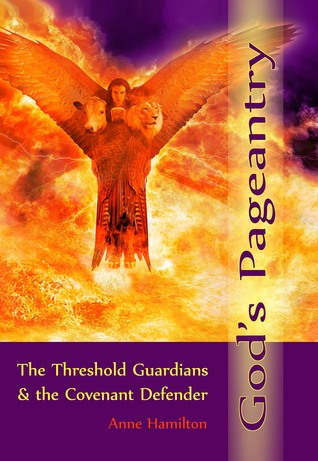
Book Review: God's Pageantry by Anne Hamilton

Review by Raelene Purtill


Anne Hamilton has done it again. What could be read as an academic treatise, has the power to touch, inform and renew our relationship with our Lord Jesus Christ.

Beyond the etymology and word derivations, scholarly appraisal and research, there is true meaning and personal application to be gleaned from ‘God’s Pageantry’.

I enjoyed and related to the personal stories that form the empirical evidence of the book. As Anne says in her opening statement, ‘How can (she) have written my story with such uncanny accuracy?’

I have learned about Threshold Guardians before – those who would stand before you and declare ‘you shall not pass.’ As a fantasy writer, they were familiar to me. New to my understanding, was the Convenant Defender - the greatest of all being Jesus Christ Himself.

Names, identity and destiny are themes I explore in my own writing. They will now be informed by the knowledge gained from Anne’s perspective.

About Raelene Purtill

Raelene holds a Diploma in Creative Arts (writing and drama), and spent more than twenty years as a television production assistant with Anglican Television and Channel 7. She has also served Harvest Creative Mission as Queensland co-ordinator for the Christian Dance Fellowship, and holds a Certificate in Creative Ministry.

She has had several short stories published, facilitates a local writing group which meets once a month, and has recently volunteered to serve as Workshop Co-ordinator with Omega Writers.


Thursday, 5 February 2015

Book Review: A Good Place to Hide by Peter Grose

Reviewed by Anne Hamilton

I’m not sure if the writer is a Christian but he’s Australian. And the story is such a significant one, about Christian compassion in time of war, that it seems appropriate to review this book—even if it is a bit of a ‘ring-in’.

I first came across the story of Le Chambon-sur-Lignon towards the end of Unspeakable by Os Guinness. After discussing the enigma of a good God in a world of appalling evil, Guinness turns the tables and relates the story of Jewish historian Philip Hallie.

An acclaimed author and respected scholar, Hallie was an expert on the Holocaust. After years of study, he discovered to his horror that you become what you read. One traumatic night, he left his family home and walked for hours until he reached his office. Looking around in despair, his gaze alighted on his shelf of books about the French Resistance. Thinking that the heroism of these tales always made him feel better, he went to it and there noticed a book he’d never read before.

After just a few pages, he found tears on his face. Impossible, he thought. But his heart, hardened and calloused by decades of studying atrocities, broke open at a story of irresistible, unmitigated goodness. The villages surrounding Le Chambon-sur-Lignon, on an isolated plateau in central France, had been instrumental in saving thousands of Jewish children.

As Guinness told it, it was a profoundly affecting story: Philip Hallie was perhaps the last Jew to be saved by the villagers of the Plateau.

So it was with great eagerness I approached A Good Place to Hide. It’s workman-like, rather than impacting. It’s missing the emotional wallop I was expecting—I’d been brought to tears by Hallie’s story but this is a brisk and business-like account, not a spiritual rollercoaster. It is dotted throughout with a dry, laconic Aussie humour which, while it raises a smile, sometimes strikes a discordant note.

Grose brings a journalist’s background as he relates the both the individual and collective stories of the pastors, the doctors, the carers, the forgers, the police, the resistance fighters—even the Nazis themselves. He points out that Hallie who went on to make the village famous through his own book, Lest Innocent Blood Be Shed made many mistakes in this account—though he also got much right.

At the start of the Second World War, the predominately Huguenot villagers of the Plateau were influenced by their ardently pacifist minister André Trocmé to take in refugees from all over occupied Europe. These included Jewish children who had been interned in camps across France prior to being shipped off to Auschwitz or Buchenwald. These ‘legitimate’ registered children made it possible to conceal others in town, under the noses of German soldiers, who were there to recuperate and recover after fighting on the Russian Front.

An astonishing account of what Christians, working together with love and compassion, can achieve. Too often we read inspiring accounts of particular Christians and, heroic as they are, Christianity was never meant to be a faith renowned for its rugged individualism. Rather it is meant to be a story of the Body of Christ, all parts working together. Here is such an account.

Despite its sarcastic wit and investigative-reporting style, this is a moving story of which all Christians should be aware.

Publisher’s Blurb:

This is the story of an isolated community in the upper reaches of the Loire Valley that conspired to save the lives of 3500 Jews under the noses of the Germans and the soldiers of Vichy France. It is the story of a pacifist Protestant pastor who broke laws and defied orders to protect the lives of total strangers. It is the story of an eighteen-year-old Jewish boy from Nice who forged 5000 sets of false identity papers to save other Jews and French Resistance fighters from the Nazi concentration camps.

And it is the story of a community of good men and women who offered sanctuary, kindness, solidarity and hospitality to people in desperate need, knowing full well the consequences to themselves.

Powerful and richly told, A Good Place to Hide speaks to the goodness and courage of ordinary people in extraordinary circumstances.

Allen & Unwin
RRP $32.99
1 June 2014

Anne Hamilton loves stories of ordinary heroism. Her forthcoming children’s fantasy The Days are Numbered is about ordinary kids who have no magic to help them, only courage and a desire for peace.

Thursday, 11 December 2014

Book Review: Trapped on Devil's Peak by Denis K Shuker

Reviewed by Anne Hamilton

Publisher’s Blurb: The second book in this series features gripping action in the mountains as The Riwaka Gang get involved in another rip-roaring, high octane adventure. This time they battle with the powers of nature in a story that will leave you gasping for air! The four children need all their mountaineering skills and a ton of faith, against incredible odds in the rugged mountains of New Zealand in the South Pacific. Will they survive—with the odds stacked so high against them? You won’t want to miss this next adventure of The Riwaka Gang.

I’ve never grown out of enjoying a good kids’ story. The prospect of a fast-paced improbable adventure, sparkling with innocence and edged with danger, is part of the tantalising lure. The other part is the appeal of a happy ending.

Some people might think these two attractions add up to escapism. But on the first, I’m reminded of GK Chesterton’s thought: ‘Truth, of course, must of necessity be stranger than fiction, for we have made fiction to suit ourselves.’ Even the most improbable tale is usually less stranger than real life and, if for you it isn’t, then you need to get out more.

And on the second, I’m reminded of the happiest of all happy-ever-afters: you’ll find it lurking in John 21, amongst other places. Real life should have a fairytale quality, rather than the slow decline accompanied by the quiet desperation described by Thoreau.

If all this is way too philosophical an introduction for Trapped on Devil’s Peak—A Riwaka Gang Adventure, hey, rest easy. It isn’t like that in the book. This is a fun romp about a group of kids who start their holiday hiking up a ‘dormant’ volcano.

Well, I have to say my Kiwi cousins obviously have a different definition of ‘dormant’ to mine. From the start, author Denis Shuker describes a mountain I’d class as ‘mildly active’ but I’m prepared to be ‘edjumacated’ on the finer technical points of NZ mountains.

The Riwaka Gang start their holiday with a hike up Devil’s Peak, intending to stay overnight in a high altitude cabin owned by Rangi’s uncle.

Jackson has a sense of foreboding from the start and his unease is not helped by mysterious sounds in the middle of the night—groaning and chains rattling. The old ghost stories about a long–dead miner haunting the cabin prey on his mind.

Next morning Rangi claims to have heard nothing. Jackson is in the process of dismissing the sounds as his over–active imagination when Sam asks if anyone heard strange noises in the night. After some investigation, a concealed trapdoor is discovered. It leads down into a dark shaft belonging to an old gold mine.

The gang start to explore, only to discover a girl, tied up and gagged. She’s Sally Wong, a famous young Chinese ballerina who is being held for ransom. The gang had already heard about her kidnapping on the news. They’ve barely rescued her when the thugs who abducted her arrive to check on their captive.
The gang is all captured. It quickly becomes clear the thugs will not have the slightest compunction in shooting them, if they resist. Their vicious leader, Scarface, wants to cut off one of Sally’s ears and send it to her parents in order to motivate them to pay the ransom money without further delay.

Can the Riwaka Gang escape? Can they get Sally out as well?

With a snowstorm coming and the ‘dormant’ volcano rumbling, it seems that if they don’t die one way, they’ll die the other.

A rollicking modern adventure sprinkled with a slight old-fashioned style, mainly because of its omniscient viewpoint. It has a huge dollop of charm and lots of fun dialogue. Whenever danger strikes, the Riwaka Gang are ready on the one hand with a prayer and on the other with a wise–crack.

And just a small spoiler: yep, as expected, Trapped on Devil’s Peak does have the obligatory happy ending.

For more details, see Denis Shuker's website.

Anne Hamilton is the author of eleven books. Her children’s books include Merlin’s Wood, Many Coloured Realm and Terry—The Adventures of a Terek Sandpiper. Her website is Fire of Roses.

Monday, 3 November 2014

Favourite Craft Books - Anne Hamilton

The Seven Basic Plots by Christopher Booker


My favourite craft book (apart from Madeleine L’Engle’s Walking on Water) is a superb book by Christopher Booker: The Seven Basic Plots - Why We Tell Stories (Continuum Books, 2004). It’s a story about story, I guess, and comes across as a narrative in its own right, rather than an analysis of technique.

The structure is one of the most difficult aspects of a novel to get anywhere near ‘right’. Although there are general rules to help (such as the climax should occur about 85% of the way through), there are in fact so many variables to consider that formula should always bow before the reader’s intuitive sense of correct narrative flow.

And what’s that exactly? How do writers tell what ‘works’?

As Booker points out, satisfying structures are in fact remarkably unoriginal. He’s found identical structures in a twentieth century novel and a medieval Asiatic folktale. Perhaps the reason they are both memorable may well be to do with the way readers resonate with the rhythm and flow of the storytelling.

What doesn’t work doesn’t survive.

So, if we want our work to survive, it’s good to look at the structure of various works of classic literature and copy it.

Right.

So what are the seven basic plots?

According to Booker, they are:

1. Overcoming the Monster
2. Rags to Riches
3. The Quest
4. Voyage and Return
5. Comedy
6. Tragedy
7. Rebirth

Notice that romance, thriller, historical fiction and so on don’t make the list. That’s because they’re genre, not plot. The confusion in many writers’ minds—where sometimes genre equals plot—is a problem. When plots meander in many modern novels and fail to deepen into any of the above (or any combination thereof), it means emotional impact is lost.

There’s a good reason archetypes should be used in structure: because they satisfy the human longing for story.

Booker discusses everything from literary classics to popular film as he throws up examples of why great storytelling endures. His book gave me real insight as to why some books ‘work’ and stick in the imagination—as well as why others fail and fade.

He takes the reader through the principles by which, for instance, Gone with the Wind follows the same ‘Voyage and Return’ motif as The Lion, the Witch and the Wardrobe! The book opens up a new way of thinking about how to shape a satisfying plot.

And the last reason it’s one of my favourite craft books is simply because its focus is so entirely on story narrative, not on formula.

Anne Hamilton is the author of eleven books. Her children’s books include Merlin’s Wood, Many Coloured Realm and Terry—The Adventures of a Terek Sandpiper.

You can find out more about Anne at her website: http://fire-of-roses.com/wp/


Thursday, 4 September 2014

Happy Birthday ACW! (and ACW Birthday Scavenger Hunt)

by Anne Hamilton

Birthdays, like New Year’s Day, celebrate and memorialise appointed times. They stand out in the roll of weeks and months, giving us a chance to reflect on the joys and sorrows of the past, but also on our hopes for the future.


ACW group at 2013 CALEB Conference, Left to Right: Catherine Hudson, Rose Dee, Kerry-Lee Harney, Narelle Atkins, Jo-Anne Berthelsen, Anne Hamilton, Jenny O’Hagan, Iola Goulton, Ray Hawkins, Mary Hawkins, Dorothy Adamek


They give us a chance to pause in our busy schedules and honour another. So, since it seems strange to honour an organisation, let’s honour those involved:
  • The founders: Narelle, Jenny and Dorothy (Dotti)
  • The writers who’ve blogged
  • The visitors who’ve commented
  • The authors who’ve been interviewed
  • The story-tellers whose books have been reviewed
  • The gift-givers who’ve offered prizes
  • The publishers who have taken so many risks on books in this difficult time of transition

Most of all, let’s honour God and give thanks to Him for the favour He’s shown to us in the past year. He’s been awesome!

The sheer delight of birthdays has never been captured better, at least in my view, than in Christina Rosetti’s A Birthday

My heart is like a singing bird
               Whose nest is in a water'd shoot;
My heart is like an apple-tree
               Whose boughs are bent with thickset fruit;
My heart is like a rainbow shell
               That paddles in a halcyon sea;
My heart is gladder than all these
               Because my love is come to me.

Raise me a dais of silk and down;
               Hang it with vair and purple dyes;
Carve it in doves and pomegranates,
               And peacocks with a hundred eyes;
Work it in gold and silver grapes,
               In leaves and silver fleurs-de-lys;
Because the birthday of my life
               Is come, my love is come to me.

May Love Himself come abide with you this birthday!


Anne Hamilton is a big fan of Christina Rossetti. Several of her books, including Many-Coloured Realm and God’s Panoply have extensive quotes from Rossetti's poetry.


a Rafflecopter giveaway

ACW SCAVENGER HUNT CLUES FOR THURSDAY:

Clue 10 from Anne Hamilton: What is the essential meaning of submit in Hebrew? 
http://fire-of-roses.com/wp/ 

Clue 11 from Ray Hawkins: What book title am I holding in my hand on my Home page? http://rayhawkinsauthor.blogspot.com.au 

Clue 12: from Andrea Grigg: Which city and country was I born in? http://www.andreagrigg.com/   

We hope you're enjoying the hunt and locating the answers to the clues. The contest rules are listed in Monday's post. Please remember to comment on Monday's post, complete the online form and your Rafflecopter entry. Rafflecopter lists all the options for gaining extra entries in the drawing, including commenting on the posts this week. 

The Scavenger Hunt closes at 2pm on Sunday, September 7 (AEST). The winner will be announced on Tuesday, September 9. Good luck!

Thursday, 21 August 2014

Book Review: Integrate by Adele Jones

Reviewed by Anne Hamilton


Publisher’s Blurb:
Trust the science - unless your life depends on it.

Blaine Colton had been handed a genetic death sentence until revolutionary gene therapy changed his life. Living a relatively normal existence, he is called to an unscheduled post-treatment appointment just weeks before his eighteenth birthday.

Informed that his lifesaving procedure was never approved, he is held against his will for his status as an apparent illegal GMO. Subjected to constant testing, refused contact with his parents and deprived of life sustaining medication, Blaine begins to suspect that something is wrong. Wanting answers, he escapes the Institute and ambitious Chief Scientist, Dr Melissa Hartfield.

Now a fugitive with a failing body, Blaine must find Professor Ramer, the developer of his therapy. But the Professor has vanished and time is running out. Fast.


I loved this story from the first paragraph. I originally saw it as an entry in the CALEB Unpublished Manuscript competition in 2013. It stood out even in a very strong competitive field. My only misgiving was that it was set in Brisbane, my hometown, and I could picture Blaine’s every move as he tried to evade his captors. I wondered how much my enjoyment was affected by my ability to visualise the actual locations in brilliant bougainvillea Technicolor. Off it went to judges overseas and interstate who enjoyed it just as much as I did.

This is a fast-paced YA techno-thriller. Blaine’s miracle cure has already occurred before the book opens. For years, he was a drooling, disabled human vegetable whose adoptive parents have sacrificed their lives in the hope he could be cured. Their faith has been rewarded and now Blaine is a regular teenager who can walk and talk and look the girl he’s crazy about in the eye instead of the kneecap.

But his right-side-up life is about to hit a huge bump in the road. It tumbles into upside-down freefall: no one has counted on the ruthless ambition of several medical researchers.

Blaine’s regular check-up has turned into a nightmare when he is held against his will as an illegal GMO: genetically-modified organism. Chief scientist Melissa Hartfield is desperate to discover how her erstwhile mentor, Professor Ramer, brought about this radical cure. Ramer has left with no forwarding address and she’ll stop at nothing to find out the secret of his work.

She’s barred Blaine from his parents and them from him. And she’s made him think he’s carrying a potentially deadly contagion and them think he’s become violent and subject to murderous rage.

Can Blaine escape? He’s got one secret: a tiny supply of pills called Ramer’s Cure and, if he can eke them out while making Hartfield believe he is debilitated and stupid, he might stand a chance of getting out of the high security cage where he’s incarcerated.

A wonderful story about hope, love, miracles and God’s quiet oversight of every sparrow’s fall. It takes place in Brisbane and some other location. I could tell you where, as I could also tell you more about the story. But I won’t. As Professor Ramer says, if I did—then I’d have to kill you.

Trade Paperback
Release: 1st September 2014
ISBN: 9781925139099
Price: $16.99

Ebook
Release: 1st September 2014
Kindle ISBN: 9781925139105
ePub ISBN: 9781925139112

Anne Hamilton is an editor and author. In fact she did an initial edit on Integrate as part of the prize for the CALEB Unpublished Manuscript competition before it was turned over to the publisher. Because she’s also an author, she’s an intrusive editor and throws creative nuggets at writers for their consideration. It’s no good, in her view, telling authors their manuscripts don’t work at particular points without giving them ideas of how to fix them.

Monday, 14 July 2014

The First Chapter as Threshold

By Anne Hamilton


  • An opening paragraph of 50 pages. Yep, that’s right. It’s not a typo: 50 pages, not 50 words.
  • A sentence in the first paragraph in excess of 80 words. With nested clauses, rather than a progressive linear thought.
  • A prologue of five manuscript pages, entirely presented in an eye-straining font with baroque flourishes.
  • An appeal to readers half way through the first chapter—no kidding, a striking full-page direct marketing ad with big black borders for maximum impact—asking them to take to social media and tell the world how much they’re enjoying the book.
  • A sentence with four adverbs: one to start, one to finish and two in the middle. On the first page.

Elementary mistakes. Careless, you might think. The sort of errors made only by inexperienced or ignorant writers. Yet, don’t be too quick to decide you wouldn’t make a similar mindblowingly-simple blunder!

When I first started appraising fiction, I made myself a checklist of common mistakes to look out for. It started at four pages. It’s grown to nine. But, as I’ve worked with authors, I actually think that the First Chapter Blues I wrote about last week are not primarily symptomatic of problems with writing. I think the issue is spiritual.

It’s rarely about mastering the finer points of writing. First chapters are, in fact, the intersection of writing as a craft and as a spiritual beachhead. To look only at craft issues is to ignore what for many writers is real problem.

First chapters are thresholds. This is why so many of us self-sabotage at the very beginning. The problem isn’t really first chapters (or even first books—how many authors are ripped off by unscrupulous companies on their initial foray into the world of publishing?); it’s about our propensity to sacrifice on thresholds. The more significant the threshold, the greater the sacrifice.

Sometimes the sacrifice, paradoxically, is the book itself.

Most Christians have never heard of threshold covenants (also called ‘cornerstone covenants’). Yet, instinctively we ‘know’ thresholds require sacrifices. We are aware, without ever being told, of the real nature of the spiritual dynamic. We sense we aren’t going to cross the threshold from ‘unpublished’ to ‘published’ without paying a price.

Several options are present at the threshold but most Christians, being nice, choose not to sacrifice others. (A lot of the problem is that that ‘nice’ is not a fruit of the Spirit.) Instead we sacrifice ourselves through sabotaging our books. I see it all the time with authors whose writing suddenly takes a quantum leap upwards in Chapter 4—just after the most generous commissioning editor will have given up. Trust me, I recognise the behaviour—because I’ve done it myself.

Authors who regularly engage in this sort of behaviour need to realise it’s not about technique. It’s not about learning how better to craft an opening chapter. Once that’s perfect, they’ll find other ways to shoot themselves in the foot. Like the author who couldn’t re-submit to a waiting publisher because she decided there were half a dozen possible inconsistencies in her professionally-edited novel. It would take less than five minutes to fix the lot, but two years later, she was still in a spiral of anxiety about them and unable to decide whether or not they really were inconsistencies. Normally she’s not a ditherer.

At the threshold, our behaviour changes.

Not everyone has a threshold problem. But if your attempts to come into God’s calling for you are repeatedly met by constriction and wasting—then it’s not about your ability, it’s about you. You’ve got much more to get sorted in your life than a narrative hook, the rise and fall of tension across a dozen pages or whether you’ve Resisted the Urge to Explain.

Make no mistake—a threshold is a complex place. Its dangerous nature is attested throughout Scripture by the fact that, more often than not, a godly threshold moment has a pair of angels standing guard.

Many people try to run the gauntlet of the threshold and wonder why God wasn’t there for them. They feel betrayed. Of all the soul-destroying, faith-annihilating, hope-crushing events in life, this is often the worst. You finally get to move into the calling you believe God has always prepared for you but you are so seriously mutilated financially or emotionally or mentally as you step up to the doorway, you’re not sure you can ever risk going back.

You are indeed called to make a sacrifice, but never to be a sacrifice. If you don’t understand that at a heart level, then you’ll simply find ever more subtle ways of throwing yourself on your sword.

*********************************************************************************

Anne Hamilton has spent the last three years researching threshold covenants and prayer-counselling others about them. She was surprised to discover how easily they can be spotted in writing.

Monday, 7 July 2014

First Chapter Blues

By Anne Hamilton

The human brain is ‘wired for story’, according to Lisa Cron, when discussing brain science to craft stories. Probably even before Scheherazade invented the cliff-hanger so her husband wouldn’t kill her, humans have felt a sense of satisfaction with some story-telling styles and not with others.

Sure there can be cultural differences. In the west, we like an underpinning of logic. In Japan, mood and atmosphere are the all important features. Master story-tellers know how to spin out a tale so the audience, like Goldilocks, feels it sits just right. Such knowledge comes from lots of practice and discovering when and where the audience responds.

In the last few centuries, genre fiction has acquired the air of being very formulaic. To a degree this is true. As an editor, I often encounter authors wanting to break the mould. However, there’s a very good reason for the formula: it is the one publishers have found from long experience most satisfies the human craving for story. If you’re going to break the formula, you need to think hard and long about why.

First chapters have to be an author’s best writing for many reasons: not least because often it’s all a commissioning editor will look at. (And often they won’t even look at all of it.) So what makes a good first chapter? Most writers today realise that opening with a narrative hook is almost essential. Tick that as pretty much common knowledge.

However, beyond that, it can be uncharted territory. Let’s look at mistakes to avoid. Most common problems fall into two categories: structure and character development.
  • The narrative hook should be integral to your story, not a tacked-on introduction of high-level drama or mystery. The story shouldn’t fall after the opening and flatten out, it should dip before rising again to a mini-crisis at the end of the first chapter.
  • If, just past the narrative hook, the story pauses to spill an information dump on the reader or fill in several paragraphs of backstory, all the momentum of the opening is lost.
  • If the story backtracks after the opening to reveal what led up to the narrative hook, then the forward movement is stalled and it’s usually immensely difficult to retrieve it.
  • If the beginning features nameless characters performing vague, mysterious actions, it’s not necessarily intriguing. The author may be aware of the significance of it all but, for the reader, there’s a risk of losing the plot before it’s even started.
  • Perhaps the biggest mistake, however—because it doesn’t seem like a mistake—is revealing the protagonist’s trauma too soon. This is an issue I increasingly encounter. Way back in the character’s past, there’s a critical incident that’s the key to their behaviour. Without this, nothing about their actions makes true sense. Unfortunately because authors wants readers to like their characters from the start, they can be premature in their revelations.
Instead of dropping little hints, building up a list of clues and letting the reader savour the mini-mystery, authors are increasingly tending to adopt this counter-productive strategy. Just as the emotional impact of hearing about a friend’s trauma is much greater than that of hearing about a stranger’s, so too it is with characters we’ve come to know through the course of a story. It’s better to leave it until a much later chapter where it can deepen our appreciation of a chara
cter and create a rounder, more full-bodied impression.

These five structural/developmental points are ones that tend to put me off, right from the start. Do you share this? Or find there are others annoy you more?

Anne Hamilton is an editor and author. She once taught mathematics for three decades. Her new book analyses the mathematics of one of the greatest of all English poems, Sir Gawain and the Green Knight.

Thursday, 5 June 2014

Book Review: Nomad by RJ Anderson

Reviewed by Anne Hamilton


Nomad is ostensibly the second book in the Swift series but actually it’s the culmination of the entire series going back as far as Knife. It’s a fantasy about faeries and humans, their interactions and failings, their noble aspirations and their thoughtless treacheries.

Author Rebecca Anderson has been criticised for allowing her Christian conviction to interfere with the story, though in practice all that really means is that one of the major characters in one book was the son of missionary parents.

My favourite character throughout the series has been Martin who is unique even for a faery. He could lie. When the Empress needed to deceive someone, she’d send Martin. He was the bad boy of the faery world and, despite his love of theatre—especially Shakespeare—his casual treachery and outright callousness did not make for an appealing character.

Then a seismic shift took place. The Empress, ruthless and cunning beyond measure, was on the verge of taking over a peaceful Welsh faery kingdom by deception. There was nothing to stop her. Yet Martin, her cold–hearted minion, turned on her. And the reader knows, though no one in the faery realms has a clue, that he has absolutely no political ambition whatsoever. He’s not out for the throne.

Now Martin’s been on the run for several books, gradually moving from bit player to star. Increasingly he’s coming across as a deeply tortured soul. Do faeries have souls? The author raised it at one point but it was a question that never got truly explored. Except perhaps through the stories themselves.

As Nomad opens, Ivy, half–faery half–piskey, and Martin, half–faery half–spriggan, are travelling together across Cornwall because Ivy’s been exiled from the Delve.

As they reach key landscape features, she dreams of a spriggan boy who lived centuries ago and she suspects is Martin’s ancestor. Martin, by contrast, doesn’t ever dream. They conclude that the dreams are those Martin would have, if he could, and that she’s receiving them because a bond was created between them when Martin saved her life (in the last book).

Ivy realises her aunt Betony—Joan the Wad—is still ignoring the signs that the Delve is actually poisoning the piskey population. Far from keeping them safe and protected, the Delve is killing them. Risking her life, she makes contact with her old friends Jenny and Mattock, hoping that together they can find a way to convince the conservative hide–bound piskeys that the Joan is wrong.

Martin is derisive about their plans. He suggests they are doomed before they even start and that they could learn a political thing or two from Shakespeare’s Richard II.

He’s off to London to find a dealer in antiquities who won’t ask too much questions and also won’t rip him off. He wants to ‘cash in’ as much as he can of a spriggan hoard found inside a carn. He’s agreed to go halves with Ivy on the value of the hoard. The plan is to stop sleeping rough and get enough money to share a house Ivy wants to rent from the father of their mutual friend Molly. Faeries renting a house? Ah, not just any house.

Molly’s mother was a renegade faery who surrounded the home she lived in with her unsuspecting human husband with a wide variety of wards. Hence it’s the perfect ‘safe house’ for Ivy to be reunited with her mother and sister and it’s a boon for Martin. No one looking for him will be able to cross the wards—and, even if they do, an alarm should go off, giving him plenty of time to flee.

At least, that’s their brilliant plan.

When Martin doesn’t return after a second trip to London, Ivy isn’t entirely surprised. His reputation for disloyalty, unreliability and cavalier thoughtlessness is immense. Yet she can’t help thinking about the times he risked so much for her...

Meanwhile, her dreams about the spriggan prince from the distant past continue and the pieces of a long–lost jigsaw begin to fall into place.

I was considerably worried in this series that as Martin came further into the foreground, from hunter to hunted, from the Empress’ spy to rootless wanderer, he wasn’t going to turn out as I hoped. You can never be sure in series like this that the character you’ve grown to love and want to see redeemed is also the character the author feels the same way about. But it’s all I could have wanted. And then some.

A book about love, redemption, deceit, sacrifice and a lot of English countryside.


Anne Hamilton loves looking at fantasy in all sorts of ways. Her new book analysing the mathematics of one of the greatest of all English fantasy poems Sir Gawain and the Green Knight is out this week.

Monday, 7 April 2014

The Craft of Naming 2

By Anne Hamilton


I cdn'uolt blveiee I cluod aulaclty uesdnatnrd waht I was rdanieg. Arpetpanly, it deosn't mttaer waht oredr the ltteers in a wrod are, the olny iprmoatnt tihng is the frist and lsat ltteer are in the rghit pclae. The rset can be a taotl mses and you can sitll raed it. Tihs is bcuseae the huamn mnid deos not raed ervey lteter by istlef, but the wrod as a wlohe. And you awlyas thguoht slpeling was ipmorantt.

If you can read the text above, and most people can, it’s because of typoglycemia. When my niece was learning to read, her school was going through one of those fads – word recognition rather than phonics. As a result, she couldn’t tell the difference between ‘my’ and ‘mummy’. After all, they both started and ended with the same letter and that was how she was taught to recognise words. It makes a certain sort of sense to teach this way (though I don’t recommend it) because this is the way the brain operates.

It might seem like a small thing but, as someone who has had to simply toss some books aside, I assure you naming needs to take typoglycemia into account. I threw in the towel on Tolkien’s classic fantasy, The Lord of The Rings because I’d become thoroughly confused by Sauron and Saruman. I thought they were the same character, under a relatively transparent disguise: c’mon, Black Hand and White Hand; orcs and superorcs; dark tower and iron tower – and so on.

I didn’t come back for decades to The Lord of The Rings. In the majority of cases, I’ve never gone back.

So, let’s have a practical look at what not to do. Here are some don’ts when it comes to character combinations:

Annie and Alice.
Andrea and Anastasia.
Catherina and Cordelia.
Darren and Davin.
Dotti and Dannii.
Elaine and Elle.
Garthe and George.
Joanne and Janice.
Jamie and Jesse.
Kay and Kerry.
Marie and Madeline.
Narelle and Nancye.
Paul and Percival.
Terry and Tommy.
Ian and Neil.

The last one probably wasn’t obvious but you’d be surprised how many people mix up those two names in their heads. Ask any Neil how often people call them by the wrong name! There’s even been a psychological study done.

It may seem a small thing—almost too small to worry about—but it’s small things that make or break our novels. As Zechariah says: ‘Do not despise… small things.’

As writers, we need to pay attention to detail and consider not just our characters’ names but whether or not we’re making our book more readable through the choices we make.

Anne Hamilton learnt a lot from Tolkien’s mistake. She decided in her own fantasy writing the reader should be able to tell the difference between the elves and goblins just by looking at their names. (Though she wonders, in retrospect, whether prepositions for goblin names in Many-Coloured Realm was really such a good idea.) In her upcoming fantasy Daystar, all the major characters have names starting with a different letter in the alphabet.

You can find out more about Anne at her website, Fire of Roses.

Canstock Photo by ra2studio

Thursday, 3 April 2014

Book Review: Pieces of Eternity by Michael Jensen

By Anne Hamilton


It’s often hard to convince successful speakers that what works in front of a microphone doesn’t work in print. As an editor I often struggle to convince preachers and teachers that the rhythms and sentence structures that deliver a great punchline to a live audience simply fall flat on the page.

It’s vitally important we choose our words thoughtfully for the medium we’re using. I make this point to make a confession: I have read some of the pieces in Michael Jensen’s Pieces of Eternity when they were originally published in the Eternity newspaper and I was bored witless by them. The majority were too long and intense to hold my interest and, before long, I was glancing at the length on the page and deciding not to even read the first sentence.

Now I read long and intense (and even boring) books all the time, so I wondered why these articles failed to appeal to me. There’s a lot of research been done as to how the internet and blogs, in particular, have changed the way we read. Having looked at that research, I now understand why one quick glance was enough to cause me to ignore the articles.

They did not take account of the fact that we come to newspapers with different reading habits and expectations. Like the successful speaker who can’t transition to the printed page, the mistake was to think that what are essentially book chapters suit a magazine format.

All this to say that Pieces of Eternity is a great book and, if you felt like me about the articles in the newspaper, it’s time to rethink.

There are some great thoughts here encapsulated in short, punchy articles. (Yes, what’s short in a book is not short in a newspaper!) Amongst my favourites were Organised Chaos with its contention that Scripture suggests the opposite of disorder is not order but peace; Scientists Playing God? with its passing comment poesis (yes, poetry!) means ‘human construction’; the delightfully trivial observation in The Birthday of the Book: The King James Bible turns 400 that it was published when Shakespeare was 46 years old and in Psalm 46, the 46th word from the beginning is ‘shake’ and the 46th word from the end is ‘spear’; The Churches and Child Abuse in which Jensen suggests that ‘ministry’ has become a cause for idolatry when the rights of a person to remain in ministry trump protection of innocent victims; The Music of Love in which it’s pointed out how often people in Scripture burst into song at the drop of a hat.

My favourite however has to be Surviving the Office Jungle for its practical depth and for its no-nonsense claim that anyone who does not think they use dissembling and pretence in the workplace is deceiving themselves. This article alone is, in my view, worth the price of the book.

Pieces of Eternity
Michael P. Jensen
Acorn Press Limited – www.acornpress.net.au
RRP $24.95 (paperback)
9780987428653 (paperback)
9780987428660 (eBook)

Synopsis

Does God have a sense of humour? Can Christianity make sense of our 21st-century world? What does it mean to be happy? Is it possible to survive in the jungle of office politics, or in the warzone that is social media?

In this provocative and stimulating collection of pieces from Eternity magazine, Michael Jensen presents an authentically Christian take on the way we live, work and think. With insight, humanity, and a humorous touch, Jensen takes us on a tour of the contemporary soulscape, from the fall of the Berlin Wall to the music of Cold Chisel. Pieces of Eternity will surprise, delight and engage its readers.


Anne Hamilton is an author and reader. She spent her childhood reading science fiction and fantasy and, while she still loves the genre, she also enjoys curling up with non-fiction of all kinds. She enjoys researching names and name covenants. You can find out more about Anne at her website, www.fire-of-roses.com/wp.

Monday, 31 March 2014

The Craft of Naming

By Anne Hamilton


A rose by any other name would smell as sweet. So Shakespeare famously wrote. The ongoing implication is that names don’t really matter.

Many authors, following this philosophy, treat names as interchangeable labels. Their plotlines don’t alter at all when the heroine receives a global re-branding and moves from Mary to Anastasia-Sophia. The storyline doesn’t budge in the slightest when John, the name of the hero, is swapped out for Virgil.

I find this kind of attitude remarkably odd. I find it baffling when the author hasn’t taken the time to proofread the text, thus overlooking the fact Mary and John still appear once or twice. It’s a huge jolt to me as a reader when such names appear.

Should authors care enough about their characters to select their names carefully and not randomly?
This may seem too trivial to worry about but names can make or break a story. Names carry such a huge payload for the reader that, if authors overlook this aspect of a novel, they’ve undermined it completely. One step wrong with a name and you’ve put your reader off-side from the get-go.

A fantasy starring Prince Bob will lose me on the first page. A historical romance featuring Kylie and Dwayne won’t get to first base. Likewise a biblical retelling focussing on Lisa and Ace or a contemporary drama about Hildegarde and Athelstane. YA steampunk with Jo and Sid might just work if they are really Josephine and Sydney… but even these are right on the edge of the conventions.

Amongst the unwritten rules about writing are naming conventions. Names create immediate expectations in readers’ mind. None are neutral. Most of us mentally envisage entirely different characters, even body shapes, for heroes named Flint or Fred… and do so the moment the character is introduced. As readers, we expect different outcomes and choices from characters named John, Johnny, Johnnie, Jon and Jonny.

An entire set of anticipated behaviours is already built up in readers’ minds from the first time we see the hero’s name. When another character in a story uses a nickname for the hero, a new payload comes into play, telling us—in a single word—the nature of the relationship between the two and what they think of each other.

My first fantasy, Merlin’s Wood went through over a dozen drafts before I found a publisher. At one stage one of the beta-readers made a curious comment about the villain: ‘He’s cardboard. I think the problem is his name.’ This was long before I was as deeply into studying names as I am now but I took the thought on board and pondered what names gave me a sense of darkness as soon as I saw them. I chose one of these and was soon beset by a different problem: the character came so alive with so much evil I had to tone his behaviour back, given it was a children’s book.

We tend to overlook the fact that, quite apart from the extra depth the right name automatically adds to a story, there is a spiritual aspect to naming. In Scripture, naming is a prophetic action, speaking out the identity and destiny of the individual (or even town). This is why, I believe, we get so much satisfaction from certain stories: in the best books, the characters finally into the destiny their names have prophesied for us as readers.

So, how have you chosen the names of your characters?

And: have you ever asked in prayer whether God wants to have some input into your choice?

Anne Hamilton is fascinated by names and their role in the process of inspiration. She has written extensively on name covenants in her multi-award-winning book, God’s Poetry: The Identity and Destiny Encoded in Your Name. She sometimes writes about naming at www.fire-of-roses.com/wp

Thursday, 30 January 2014

Book Review: Passion Play - The Oberammergau Tales by Valerie Volk

Review by Anne Hamilton

Over six hundred years ago, Geoffrey Chaucer imagined a motley group of pilgrims making the trek to Canterbury Cathedral and the shrine of Thomas à Beckett. To while away the tedium of their journey, each spins a story to entertain the others. Immortalised as The Canterbury Tales, the verse is as varied in theme and genre (if we can speak of ‘genre’ centuries before it officially existed) as those who tell each yarn. The knight, the squire, the prioress, the man of law, the three different religious figures along with many others have their modern counterpart. The three men of religion, for instance, are wittily portrayed as a TV evangelist, an earnest parish priest experiencing a crisis of faith and a bishop expecting a promotion.

Chaucer’s perceptive and subtly-tendered observations of human nature have delighted readers for more than half a millennium. Here too are many perceptive and subtly-tendered observations of human nature in the twenty-first century.

The fine art of pilgrimage is still alive and well in the third millennium. Every ten years when the Passion Play is performed in the small Bavarian village of Oberammergau, over half a million visitors go to see it. Valerie Volk starts her verse novel The Oberammergau Tales with a prologue, explaining the genesis of the play. Four centuries ago, Oberammergau shut itself off from the world, all the better to protect itself from the ravaging plague outside its locked and bolted gates. But Kaspar Schisler, anxious about the wife he left behind, fretting about her faithfulness and the temptation to which she might be subjected, knows the secret ways into the town. He makes his way home to her and his family, unknowingly bringing the plague with him. In an attempt to halt its progress, the villagers make a vow: once every ten years they will perform a drama showing the passion and death of Jesus Christ. This historical event forms the backdrop to The Oberammergau Tales.

Valerie Volk’s modern pilgrims have all the conveniences Chaucer’s characters lacked. They are off on a bus trip to see the event. An introductory party, an efficient tour guide, a diverse cast with complex motivations for participating in the trip. It soon transpires everyone has a secret.

The part of ‘mine host’ is played effectively by Caroline, a journalist on the prowl for personal information about the others to form the basis of a travel feature. However Caroline is tormented by her own secret: she is the ‘other woman’ in her boss’ life and she fears this trip is his goodbye gesture.

One by one, the troubled characters reveal the inner darkness of their private lives. The subdued voice of conscience is evident in the varying degrees of guilt and shame the characters experience. Their reactions range across a wide spectrum of emotion: anger, arrogance, nightmare-induced fear, desperation, desire, depression.


Like Chaucer, Valerie Volk has a keen eye for human frailty. Like Chaucer, she presents it with compassionate, empathic acuity and a warm, generous tone.

Clever, artful and deft in its avoidance of sermonising, The Oberammergau Tales is a poetic treat in conversational free verse from beginning to end. The ‘pen portraits’ of the twenty-one characters which appear as silhouettes atop the pages add the last cherry to this absorbing update of one of the great English classics. Top class.

Anne Hamilton is the current president of Omega Writers. She is quite passionate about medieval verse herself, at least from the point of view of analysing it mathematically. Her book Gawain and the Four Daughters of God: the testimony of mathematics in Cotton Nero A.x is coming soon in 2014.