
Have you
ever read a story and been moved in some way? Perhaps you've smiled, maybe
laughed out loud, felt tears, or even sobbed? Of course you have (except for maybe
the sobbing - that might’ve just been me).
 Have you
ever stopped to analyse exactly why
you felt that way? Was it the intriguing plot? The use of humour? Beautiful phrasing?
According to Lisa Cron, author of Story
Genius, our ability to be moved by storytelling is something ingrained in
us, and the thing that keeps us reading is not so much the plot or the
beautiful language involved, but our connection to the protagonist’s internal
struggles, as they work to navigate mysteries of the social (and physical)
world. Lisa Cron mentions Jonathan Gottschall, who wrote The
Storytelling Animal, and his
findings relating to functional MRI studies that suggest “when we're reading a
story, our brain activity isn't that of an observer, but of a
participant."
Have you
ever stopped to analyse exactly why
you felt that way? Was it the intriguing plot? The use of humour? Beautiful phrasing?
According to Lisa Cron, author of Story
Genius, our ability to be moved by storytelling is something ingrained in
us, and the thing that keeps us reading is not so much the plot or the
beautiful language involved, but our connection to the protagonist’s internal
struggles, as they work to navigate mysteries of the social (and physical)
world. Lisa Cron mentions Jonathan Gottschall, who wrote The
Storytelling Animal, and his
findings relating to functional MRI studies that suggest “when we're reading a
story, our brain activity isn't that of an observer, but of a
participant."
Isn’t
that we what we want? For our readers to feel like they are ‘in’ the story? To have
our readers emotionally invest in our characters so our stories are more than
simply words on a page? So how do we get readers to emotionally invest
in a fictional character, and create a reading experience that will resonate
long after the book is closed?
If we
want readers to care, then we need to mine a little deeper for those points of
emotional connection that resonate with our readers. We need to create moments
of authenticity that readers can identify with, even if on a subconscious
level, moments where they relate to the vulnerabilities our characters present,
and start to cheer them on to see them succeed.
One of the things I’m working on in my own writing is to
identify those moments in my life when I feel a certain emotion. When I’m
frustrated, what does it feel like?
What physical sensations, what other secondary emotions, what words and phrases
might be swirling round my brain? How about anger? Is that different? What does
regret look like, feel like, for you? Identifying these emotions—when we’re
feeling them—and writing about them at or near the time of experiencing such
things can be a powerful way to later create a scene with which our readers
will be able to relate. Investing in an ‘Emotion Journal’ can be a great way to
record such things.
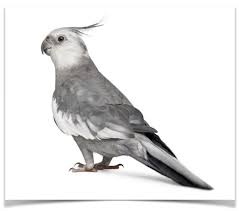 Recently, my daughter’s little birthday-gift bird, a grey
cockatiel with the sweetest face, escaped
and flew away into the cold and windy wintry world. In the days following, I
was amazed at the level of grief the loss of this tiny creature pulled from me.
It was not dissimilar to when people close to me have died; I imagine it’s a
tiny fraction of what it’s like to have a loved one disappear. Moments of
thinking everything is normal, then the realisation that it’s not that tugs
forth tears. Thinking you glimpse or hear them, only to realise it’s a trick of
the wind. Thoughts that say ‘just look here, just look there,’ that lead to
disappointment and exhaustion. Regrets. Even resentment. Battling between tremulous
hope and faith, and the cold hard reality that those (ahem) super kind,
encouraging people feel necessary to share with you.
Recently, my daughter’s little birthday-gift bird, a grey
cockatiel with the sweetest face, escaped
and flew away into the cold and windy wintry world. In the days following, I
was amazed at the level of grief the loss of this tiny creature pulled from me.
It was not dissimilar to when people close to me have died; I imagine it’s a
tiny fraction of what it’s like to have a loved one disappear. Moments of
thinking everything is normal, then the realisation that it’s not that tugs
forth tears. Thinking you glimpse or hear them, only to realise it’s a trick of
the wind. Thoughts that say ‘just look here, just look there,’ that lead to
disappointment and exhaustion. Regrets. Even resentment. Battling between tremulous
hope and faith, and the cold hard reality that those (ahem) super kind,
encouraging people feel necessary to share with you.
To lose a loved one—even a beloved pet—is not something any
of us ever want to undergo, but this experience showed me how powerful such emotions
can be. None of us like loss (except maybe weight loss!), so to find ways to
express such emotion is important, as it’s something others can relate to. This
experience provided plenty of scribblings in my Emotion Journal, and I know I
will apply this in a story one day.
 Now while we are creative writers I don’t recommend creating situations just so we can experience
emotional authenticity. (And just to be clear, I did not let the bird go!) Resources such as The Emotion Thesaurus by Angeka Ackerman and Becca Puglisi can also
be useful. This ‘Guide to Character Expression’ outlines an emotion (eg
Desire), then lists the physical signals, internal sensations, mental
responses, and cues signalling acute or repressed/suppressed forms of this
emotion. This can be quite helpful, especially if you’re not wishing to personally undergo every emotion your character must
experience!
Now while we are creative writers I don’t recommend creating situations just so we can experience
emotional authenticity. (And just to be clear, I did not let the bird go!) Resources such as The Emotion Thesaurus by Angeka Ackerman and Becca Puglisi can also
be useful. This ‘Guide to Character Expression’ outlines an emotion (eg
Desire), then lists the physical signals, internal sensations, mental
responses, and cues signalling acute or repressed/suppressed forms of this
emotion. This can be quite helpful, especially if you’re not wishing to personally undergo every emotion your character must
experience!
Resources are good, but for our writing to truly resonate with readers they need
to identify with what our characters feel, and only we can frame our
experiences in our unique voice. So the next time you feel envy, write about it
- maybe your Emotion Journal can be a prayer journal, too. When your neighbours annoy you, describe what that feels like (go on, it can be
cathartic!). When you feel surprised, or contentment, or bored, record your
feelings and keep it for use one day when your characters need to display that particular
emotion. That gives our words a rawness that readers can connect and identify
with, so our writing really resonates.
If we want our words to stick in people’s hearts long after
they have closed the pages, then let’s create authentic emotional connections.
Looking at how we can add emotional connection to our
stories is one of the elements I’ll be discussing in the Creative Writing
workshop at this October’s Omega Writer’s Conference in Sydney. If you haven’t
yet set aside time to go, I strongly encourage you to invest in prioritising
this time – not only will you get great teaching from the likes of Margie
Lawson (can’t wait to hear her!), but you’ll establish connections and make
friends with others who will cheer you on your writing journey. Details here.

Carolyn Miller lives
in the beautiful Southern Highlands of New South Wales, Australia, with her
husband and four children. Together
with her husband she has pastored a church for ten years, and worked as
a public high school English and Learning and Support teacher.
A longtime lover of
romance, especially that of Jane Austen and Georgette Heyer’s Regency era,
Carolyn holds a BA in English Literature, and loves drawing readers into
fictional worlds that show the truth of God’s grace in our lives. Carolyn is a member of American Christian Fiction Writers, Australasian
Christian Writers and Omega Christian Writers and is represented by Tamela
Hancock Murray of the Steve Laube Agency. Her debut Regency novel ‘The Elusive
Miss Ellison’ released in February 2017, and her second ‘The Captivating Lady
Charlotte’ released in June from Kregel Publications, with her next releasing in October. All are available from Amazon.com.au, Koorong, Book Depository & other sites.
Connect with her at www.carolynmillerauthor.com and subscribe to her
quarterly newsletter, and follow via Facebook, Twitter and Pinterest.


